


Policies & Ethical Standards
Your focus is on providing patients the best possible care and we’re here to help. To complement our comprehensive menu of tests, we provide resources to registered healthcare professionals to support your testing needs.
Policies & Ethical Standards
ntegrity and Ethics Policy: This policy promotes integrity and ethical behavior in all aspects of research work. It includes adhering to scientific research standards, avoiding data manipulation and falsification, maintaining confidentiality of information, avoiding conflicts of interest, and treating research participants and staff fairly and respectfully.
Participant Rights Protection Policy: Focuses on ensuring the protection of rights of research participants. This includes providing clear information about the research, its risks, and potential benefits to participants, obtaining informed consent for participation, and safeguarding the confidentiality of personal information and privacy.
Intellectual Property Rights Policy: This policy outlines the protection of intellectual property rights for researchers, the office, and its collaborating partners. It encompasses safeguarding patents, copyrights, trademarks, and trade secrets, promoting a culture of intellectual property respect, and respecting the rights of others.
Conflict of Interest Policy: Aims to transparently and fairly manage potential conflicts of interest for researchers and staff. This includes disclosing potential conflicts of interest, implementing measures to avoid or mitigate negative impacts of conflicts on research and outcomes.
Research Publication and Commentary Policy: Encourages the publication of research in reputable scientific journals and participation in conferences and symposiums. The policy promotes scientific engagement, knowledge exchange, ensures the accuracy of information, relies on credible sources, and encourages responsible and thoughtful commentary on other research.
Safety and Security Policy: Focuses on providing a safe and healthy work environment for researchers and staff. This includes defining workplace safety procedures, providing safety training and awareness, and complying with applicable health and safety regulations and standards.
These policies and ethical standards are well-defined and known to all members of the office and researchers. They are integrated into the office’s operations to ensure effective compliance and uphold ethical conduct throughout all research and consultancy activities.
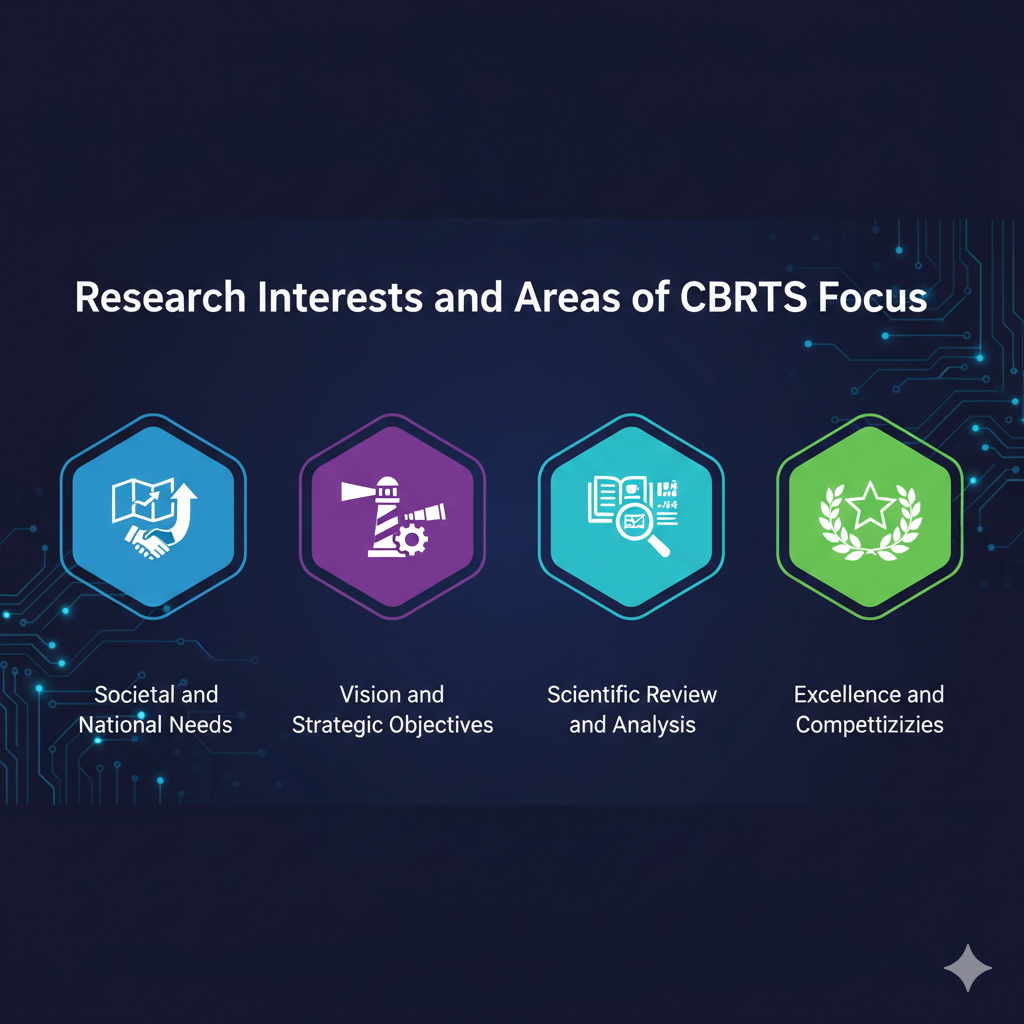
Research Interests and Areas of CBRTS Focus
The determination of research interests and areas of focus for the CBRTS for Scientific Research relies on several factors, including available resources, technical expertise, current and future challenges, and opportunities for collaboration. Here are key points the CBRTS focuses on when defining research interests:
- Societal and National Needs:
- The CBRTS should play a clear role in addressing the needs of society and the nation by developing solutions for societal problems, improving quality of life, and supporting economic development.
- Vision and Strategic Objectives:
- There should be a clear vision that defines the general direction of research, focusing on strategic areas that contribute to achieving this vision.
- Scientific Review and Analysis:
- Conduct a thorough scientific review and analysis of research needs in society, modern science, and technology to identify promising research opportunities.
- Excellence and Competitiveness:
- The CBRTS can focus on specific research areas where it excels and has competitive advantages, which will help attract distinguished researchers and increase its ability to secure funding and international collaboration.
01.
Find a location
Find the nearest location for you online through our contact page, or just call us.
02.
Make an Appointment
You can book an appointment online or contact us to send you one of our lab experts
03.
Collect a Sample
Samples can be collected in our office, a lab, or the patient can collect the sample at home.
04.
Get Your Results
Results are available for most tests within 7 days of samples reaching the lab.
Quick Contact
If you have any questions or need help, feel free to contact with our team.